Ace, King, Knave (2013): Maria McCann

★★★½

This is Maria McCann’s third novel and it has large shoes to fill: her debut, As Meat Loves Salt, set during the English Civil War, is one of the most compelling pieces of historical fiction I’ve read (with one of the most conflicted, unsettling antiheroes). Her second book, The Wilding, was set at a similar period and, for me, wasn’t nearly as powerful; but Ace, King, Knave is a return to form. Moving away from the male narrators and the 17th-century setting of the first two novels, McCann draws us into the roistering world of 18th-century London, and the experiences of two very different women.

Continue reading

The Wilful Princess & The Piebald Prince (2013): Robin Hobb

★★★

Anyone who followed my Robin Hobb reread earlier in the year will understand why I’ve been looking forward so much to this new novella. Set at Buckkeep, it forms a welcome return to the history of the Farseer family – not, I hasten to add, that it’s a continuation of Fitz’s story (for that we have to wait until April and the publication of Fool’s Assassin – God help my poor nerves). Instead it takes a step back in time to look at the story behind one of Buckkeep’s most popular legends: the Piebald Prince.

Continue reading

Blood & Beauty (2013): Sarah Dunant

★★★★½

In 1492 the Spaniard Rodrigo Borgia is elevated to the papacy as Pope Alexander VI. It’s an appointment based less on piety than political shrewdness. Generous to his friends and flexible in his scruples, Alexander may not be the pope that Rome wants, but he is the one that it deserves. After all, Renaissance Rome is a seething, ambitious, dangerous city where life is merely a poor shadow of its ancient vanished grandeur. There are as many courtesans as clerics; anything can be had at the right price; and a man can be made to disappear between dusk of one day and dawn of the next. If the Tiber keeps its secrets, he might never be seen again.

Continue reading

Bellman & Black (2013): Diane Setterfield

★★★½

A Ghost Story

As the clocks go back and the evenings grow colder – and we approach Halloween – it’s definitely time for a spot of Victorian Gothic fiction. I haven’t read Diane Setterfield’s very successful Thirteenth Tale, but I simply couldn’t resist the prospect of her most recent book, Bellman & Black. To my pleasure, it delivered all that it promised and I polished it off in two days. It reminds me, on a smaller scale and in a less ethereal manner, of Jonathan Strange and Mr Norrell. It has the same sense of everyday life set awry by something haunting and eerie, hovering at the corner of your eye; and it has the same sensitivity to the language of the time, giving the book an air of 19th-century authenticity without sacrificing its lively readability.

Continue reading

Throne of Blood (1957)

Throne of Blood

★★★★

(directed by Akira Kurosawa, 1957)

This post is severely overdue: I watched this about a month ago and I’m not sure how it slipped through the net (Goodwood seems to have distracted me). To recap: back in early September I had my first proper encounter with Kurosawa, in the form of Ran. That was a reimagining of King Lear set in samurai-era Japan; and Throne of Blood gives Macbeth the same treatment. As I’ve said before, I’m not familiar with Kurosawa’s films and I don’t know which of these two is generally considered the better. My own preference is for Throne of Blood, which I found much more accessible than Ran, even though it was filmed almost thirty years earlier. (In fact, I was surprised to find out just how old it is.)

Continue reading

Shadows of the Pomegranate Tree (1992): Tariq Ali

★★½

The Islam Quintet: Book I

It begins with an act of book-burning. In 1499, on the instructions of Archbishop Ximines de Cisneros, a troop of Christian soldiers storms the libraries and houses of Gharnata (Grenada), carrying off armfuls of precious theological, medical and scientific manuscripts. With only a handful of exceptions these are burned in front of the shocked Moorish citizens, who see the conflagration for what it is: a warning.

Continue reading

Much Ado About Nothing (1598/99): William Shakespeare

Much Ado About Nothing: William Shakespeare

★★★★★

(directed by Joss Whedon, 2012)

From the minute I saw the poster, with its moody Casablanca vibe, I couldn’t wait to watch Joss Whedon’s modern-day take on Much Ado About Nothing. Even the story behind the making of the film is marvellous. Apparently Whedon had a bit of spare time between commercial projects and, as you do when you’re an A-list director, he decided to fill it with a bit of Shakespeare.

Continue reading

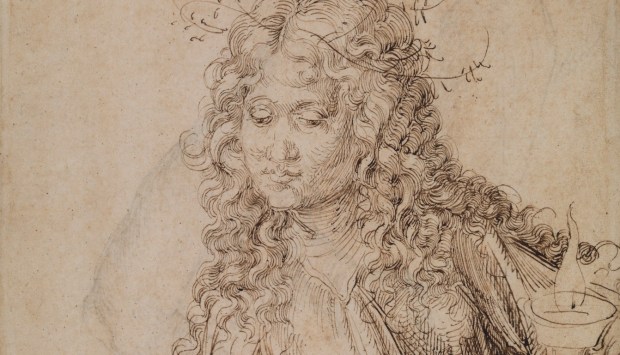
The Young Dürer: Drawing the Figure (2013-14)

Dürer: A Wise Virgin

(Courtauld Gallery, London, until 12 January 2013)

In 1490 the nineteen-year-old Albrecht Dürer left his native Nuremberg and set off on his Wanderjahre, effectively the equivalent of an extended gap year for a Renaissance German artist. He had completed his apprenticeship with the painter Michael Wolgemut but, before setting up as a master in his own right, he wanted to spend some time travelling in Germany and studying in artistic centres other than Nuremberg. His trip would turn into a four-year journey, during which he even made a pilgrimage to Colmar in the hope of learning at the feet of his hero Martin Schongauer; only to find that Schongauer had died the previous year.

Continue reading

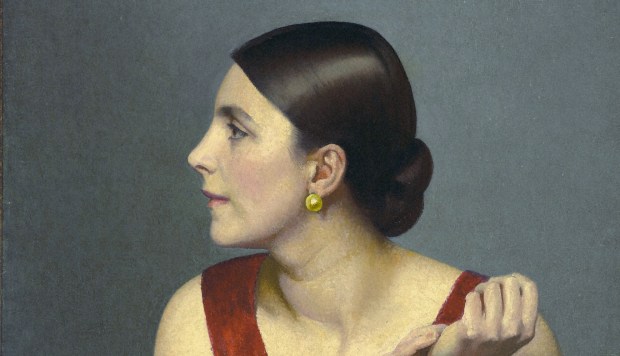
Laura Knight: Portraits (2013)

Knight: Ethel Bartlett

(National Portrait Gallery, London, July-October 2013)

If I was quick off the blocks with the new Elizabeth I and Her People exhibition, I was desperately slow at getting around to Laura Knight, which closed on Sunday. Having meant to go ever since it opened, the more so since the Grumpy Art Historian spoke highly of it when he went to see it back in July, I finally made it on Friday night, immediately after my Elizabeth visit.

Continue reading